
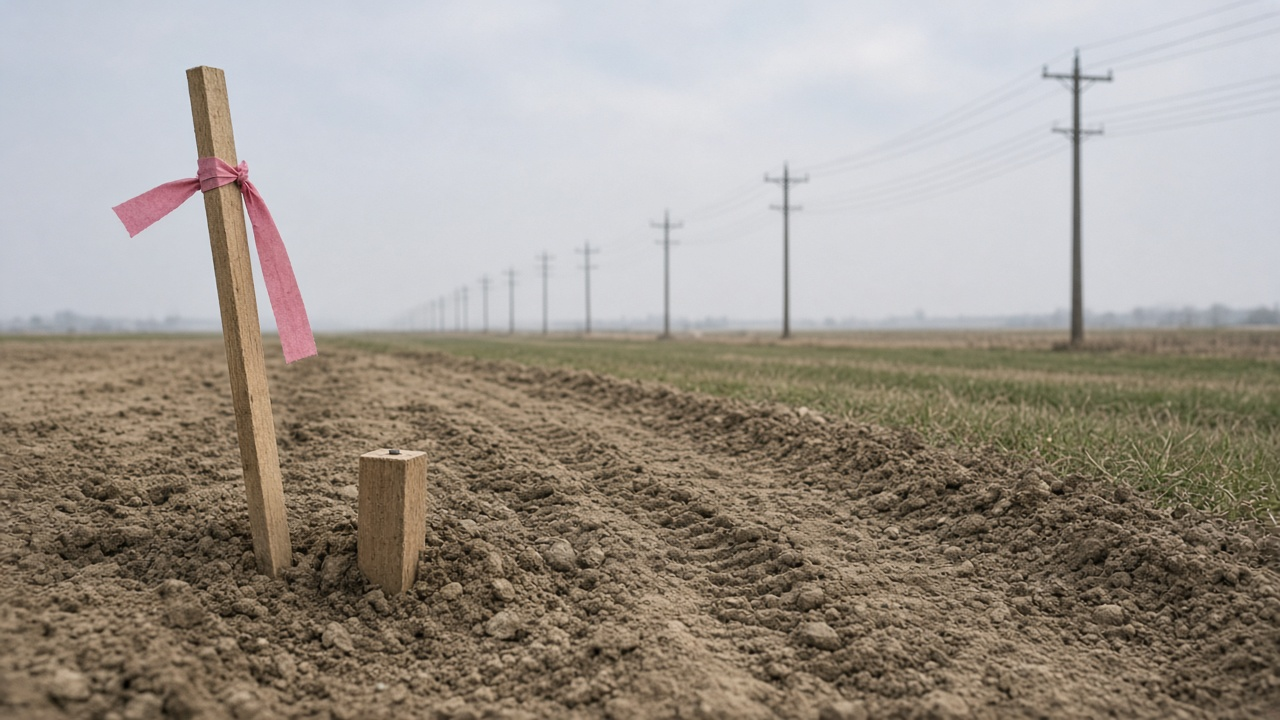
Holding Houston commercial land is a bet, not a pause. How owners weigh holding against a ground lease or a build, and where we think each path fits.
Most Houston landowners we talk to are holding by default, not by decision. The parcel was bought for a future that has not arrived, or inherited, and it sits under a mowing contract and a tax bill while the owner waits for a signal. We think that is the most expensive way to own commercial land in this region. Holding can be the right call. It should be a call, though, made against two real alternatives: a ground lease or a build.
Holding Is a Position, Not a Pause
Raw land carries costs that feel small until you add them up: property taxes, insurance, maintenance, liability, and equity that earns nothing until sale. The bet is that value grows faster than those carrying costs, usually because rooftops, traffic, or infrastructure are moving toward the site. In Greater Houston that bet has paid off often enough that owners treat it as a law of nature. It is not. Growth arrives unevenly, a new road can bypass a site as easily as serve it, and a parcel that floods or lacks utilities can wait a long time.
Holding also has a tax side that owners underweight. The appraisal district values land each year. Some tracts carry special agricultural or open space valuation, and a change in use can trigger rollback taxes on prior years. Before you change anything on a tract with special valuation, confirm the consequences with your tax advisor.
Holding fits an owner with patient capital, little or no debt, a clear thesis about what is coming, and no interest in operating a building. If any of those is missing, the other two options deserve a hard look.
The Ground Lease: Income Now, Land Later
A ground lease lets the owner keep title while a tenant or developer builds and operates the improvements. The owner collects ground rent, avoids construction risk, and at the end of a long term the improvements may revert to the landowner, depending on how the lease is drafted.
The value of a ground lease lives in the details, and three of them carry most of the weight.
- Subordination. A developer's lender will want the strongest position it can get. If the landowner agrees to subordinate its fee interest to the leasehold mortgage, the land itself can be exposed in a foreclosure. An unsubordinated ground lease protects the owner but can narrow the pool of tenants and lenders willing to deal. Settle it before the letter of intent.
- Rent resets. Long terms need a way to keep ground rent tied to value. Scheduled bumps, periodic reappraisals, and index adjustments each shift risk between the parties, and a loosely written reset clause can produce a dispute decades later.
- Reversion and condition. What comes back at the end, in what condition, and who pays to remove what nobody wants look distant on day one and matter a great deal to the next generation.
Tax treatment is a real reason owners pick this path. Ground rent is generally taxed as income as it is received, which can look very different from the gain an owner may recognize on an outright sale. Whether that helps depends on basis and estate plans, so that decision belongs with a tax advisor, not a broker.
Ground leases show up most on retail pads, medical campuses, and strong corners where a user wants control but the owner will not sell. Our look at Texas Medical Center medical office covers how campus ground lease patterns shape that submarket, and the logic scales down to suburban pads.
Building: The Most Upside and the Most Ways to Lose
Developing the site yourself captures the full spread between land value and stabilized value. It also makes the landowner a developer, with every risk that comes with the job: design and permitting, site work, detention and drainage, construction cost and schedule, financing, lease-up, and the exit. Land contributed at current value looks like free equity, but it is fully at risk once construction debt goes on.
Houston's regulatory setting cuts both ways. The City of Houston does not use traditional zoning, but deed restrictions, platting and development rules, drainage and detention requirements, and floodplain rules still decide what you can build and how much of the site you can use. Outside city limits, county and utility district rules may apply. Detention alone can take a real bite out of a small tract and decide whether a project pencils.
We think building makes sense in two situations: the owner already has development capability and a balance sheet to carry the risk, or there is a committed user before the first shovel. A build-to-suit or pre-lease changes the math more than any optimism about speculative demand. For retail pads in particular, read the leasing market honestly. Our piece on how to read Houston retail vacancy and rent explains why headline numbers can mislead.
A Side-by-Side View
- Hold. Full control and every future option. Current income, while idle equity carries cost. Patient capital, low debt, and a clear growth thesis.
- Ground lease. Title, steady ground rent, and a possible reversion. Control of the site for a long term and some upside to the tenant. Long-horizon owners who will not sell.
- Build. The full development spread. Certainty, with the land at risk under construction debt. Experienced owners or a site with a committed user.
Four Questions That Settle It
- What is your real time horizon? An owner planning to pass land to heirs weighs reversion differently from one who needs liquidity next cycle.
- How much risk can your capital carry? Holding risks opportunity cost. A ground lease risks counterparty and drafting problems. Building risks the land itself.
- What does the site actually support? Frontage, access, utilities, drainage, and floodplain status set the ceiling. Check the flood maps and utility capacity before you price any option.
- What does each path do to your taxes? Sale proceeds, ground rent, and development income can be treated differently, and an exchange strategy may or may not fit. Model it with your advisor before you negotiate.
Our View
What most owners miss is that the three paths are not equally reversible. Holding keeps every option open but charges for the privilege. A ground lease commits the land for a generation, and a build commits your balance sheet too. A well-drafted, unsubordinated ground lease to a strong tenant is, in our view, the most underused tool for Houston owners who want income without selling. Building is the right answer less often than owners hope. If you cannot say why you are holding, you are probably not holding on purpose.
If you own a tract and want a clear read on which path fits, talk with our team.
This article is general commentary, not legal, tax, or investment advice. Ground lease terms, tax treatment, and development rules vary by site and by document. Consult a qualified attorney and tax advisor about any specific property.