
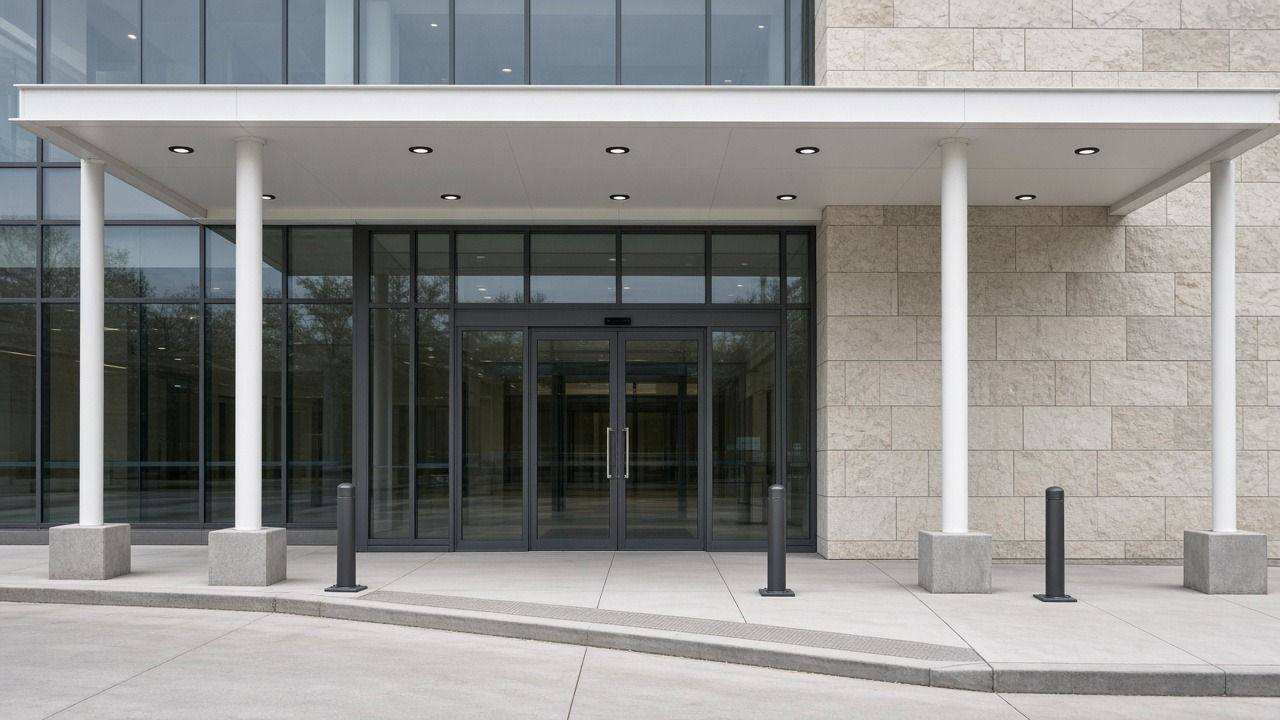
How medical office works in the Texas Medical Center: demand drivers, tenant types, on and off campus buildings, specialized build outs, ground leases, and risk.
Medical office is the one office product in Houston that refuses to trade like office. In the Texas Medical Center, it has run on a different engine: patient demand, physician alignment with hospital campuses, and build outs so specialized that tenants rarely walk away from them. This is our read on how the asset class works inside the district, where the value sits, and where the risk hides.
What We Mean by Medical Office
A medical office building, or MOB, is space designed and permitted for outpatient clinical use: physician practices, diagnostic services, procedure rooms, therapy, and the administrative functions that support them. The line between MOB and conventional office is not the tenant roster. It is the building. Plumbing at nearly every exam room, heavier electrical service, higher outside air requirements, wider corridors, larger elevators, and parking sized for patients rather than commuters all push MOB into its own category.
Within the category, we separate three products. Traditional MOB houses physician suites and light diagnostics. Outpatient or ambulatory buildings add imaging, infusion, and procedure space, sometimes with licensed facilities inside. Specialty clinical buildings carry research, laboratory, or highly specialized treatment uses that sit closer to hospital infrastructure than to office.
Why the Texas Medical Center Is Its Own Submarket
Most Houston submarkets are defined by highways and commute sheds. The Texas Medical Center is defined by clinical gravity. Hospitals, academic medicine, and research institutions cluster in a dense district south of the Museum District, bounded loosely by the South Loop, SH 288, and the neighborhoods along Main Street and Fannin Street. Holcombe Boulevard and Old Spanish Trail carry much of the cross traffic, and the light rail line runs through the heart of it.
That density changes the economics. A physician group that admits patients, operates, or refers across campus places a real value on being minutes from the hospital floor. That value shows up as willingness to pay for proximity, longer lease commitments, and a deeper investment in tenant improvements than the same group would make in a suburban building. Suburban medical corridors serve different patients and practice models, and we treat them as separate markets.
The City of Houston also treats the district differently. The City's off-street parking ordinance materials list an existing special parking area for the Texas Medical Center, which tells owners and developers that parking requirements here are handled under their own framework rather than the standard citywide approach. Anyone underwriting new construction or a change of use should confirm how that framework applies to the specific site before committing to a program.
Demand Drivers
- Outpatient migration. Care that once required an inpatient stay keeps moving into outpatient settings. That shifts clinical volume from hospital towers into MOB and ambulatory buildings.
- Regional referral pull. The district draws patients from across the Gulf Coast and beyond for specialty care. Specialists want to practice where those referrals land.
- Academic and research adjacency. Clinical faculty, trials, and research programs need space that bridges office, clinic, and lab.
- Hospital alignment. Health systems continue to employ or affiliate with physician groups and want those groups housed close to campus.
None of these drivers is immune to a cycle, but none depends on white collar headcount decisions the way commodity office does. That is the core of the MOB thesis.
Who Leases Here
The tenant mix in a district MOB is rarely uniform, and the mix drives credit, term, and renewal behavior.
- Health systems and hospitals. Large footprints, strong credit in most cases, long terms, and a tendency to control whole floors or whole buildings.
- Hospital affiliated physician groups. Groups that are employed by or contracted with a system. Credit depends on whether the system stands behind the lease.
- Independent specialty practices. Cardiology, orthopedics, oncology support, surgery, and other specialties that value proximity but sign on their own balance sheet.
- Diagnostic and imaging operators. Heavy build outs, heavy equipment, and some of the stickiest tenancy in the asset class.
- Academic and research users. Clinical and administrative space tied to teaching and research programs, often with unique use and access requirements.
Building Types: On Campus, Off Campus, Affiliated, Independent
Two questions sort almost every MOB in the district: where is it, and who controls it.
On campus buildings sit on or directly adjacent to a hospital campus, often connected by skybridge, tunnel, or a short walk. They command the strongest physician demand and often the strongest pricing. They also tend to carry the most restrictions, because the land is frequently controlled by the hospital.
Off campus buildings sit elsewhere in the district or along the edges near the South Loop and SH 288. They trade some proximity for better parking, simpler access, and fewer use restrictions.
Hospital affiliated buildings are anchored, master leased, or controlled by a health system. Occupancy tends to be steady, but owner leverage is limited when the anchor also controls the ground or tenant approvals.
Independent buildings answer only to the owner and the market. They offer more flexibility on tenant selection and pricing, and they carry more leasing risk when a large group consolidates or relocates.
How Medical Office Leases Are Usually Structured
Lease structures vary by building and by landlord, so treat the following as general practice rather than a rule. Net leases are common, with tenants carrying a share of taxes, insurance, and operating expenses. Multi tenant buildings with smaller practices sometimes run full service or modified gross. Terms tend to run longer than conventional office because the build out takes time and money to recover.
Provisions we watch closely in medical leases:
- Permitted use and exclusives. Narrow use clauses protect the building's clinical mix. Exclusives can protect a practice from a competing specialty down the hall, but they can also limit an owner's leasing options.
- Operating hours and services. Clinics may need extended HVAC, after hours access, and medical waste handling. Who pays for each matters.
- Restoration and surrender. Shielding, specialty plumbing, and equipment pads are expensive to remove. Surrender language should say clearly what stays and what goes.
- Renewal and holdover. Medical tenants often struggle to relocate on schedule because their next space takes longer to build. That makes renewal timing and holdover provisions in Houston commercial leases more consequential than in standard office.
- Transfer rights. Practice sales and group mergers are common. Assignment language should anticipate them.
- Compliance cooperation. Leases with referral sources often carry terms addressing fair market rent and regulatory review, discussed below.
The Build Out Is the Asset
In conventional office, tenant improvements are a cost of leasing. In medical office, they are a large part of what the tenant is buying and a large part of why tenants stay.
- Plumbing. Sinks in exam rooms, accessible restrooms within suites, and sometimes medical gas. Floor plates with well placed wet stacks lease faster and cost less to build out.
- Imaging and shielding. Imaging suites may need radiation shielding, vibration control, structural reinforcement for heavy equipment, and dedicated cooling. Radiation producing equipment in Texas is subject to state radiation control rules, and shielding design should come from qualified professionals.
- Power and backup. Clinical users often need more electrical capacity than standard office, plus backup power for critical systems. Generator capacity and fuel arrangements belong in diligence.
- HVAC and air quality. Procedure and treatment spaces can require higher air change rates, pressure relationships, and filtration beyond office standards.
- Accessibility. Patient facing space faces close scrutiny under federal accessibility standards, from parking and drop off through exam rooms and restrooms.
Licensed outpatient uses can add another layer. State licensing for certain facility types can involve architectural and life safety review, which affects timelines and the scope of the build out.
Parking and Access
Parking is a clinical issue in this district, not an amenity. Patients need short walks, clear wayfinding, covered drop off, and garages that do not require a map.
The district's road network, light rail service, and structured parking all shape how a building performs. Garage control is a real point of negotiation. In many cases parking is owned or operated separately from the building, so a tenant's patient experience depends on agreements the tenant never sees. We look at who controls the garage, how validation and pricing work, and whether parking rights survive a sale or a ground lease event.
Ownership and Ground Lease Patterns
In general terms, the district shows a mix of ownership models. Health systems and academic institutions control much of the land, and many buildings near campus sit on ground leases rather than fee simple land. Some systems own and operate their own MOB. Others partner with developers or investors through ground leases, build to suit arrangements, or sale leasebacks, keeping control of the land while moving capital off the balance sheet.
Ground leased MOB requires a specific kind of diligence. Remaining ground term, rent resets, use restrictions, tenant approval rights held by the ground lessor, and rights of first refusal on a sale all affect value.
Regulatory Considerations, in General Terms
Medical real estate sits close to healthcare regulation. When a landlord or tenant is in a position to refer patients to the other, federal physician self referral and anti kickback rules may come into play. In practice, that often means rent and terms set at fair market value, written agreements, and careful handling of free rent, concessions, and shared space. State licensing may also apply to certain outpatient facility types. These rules are fact specific, and both sides should involve healthcare counsel early.
Risks We Watch
- Concentration. A building that depends on one system or one large group carries that tenant's strategic decisions as its own risk.
- Consolidation. Mergers and system affiliations can pull groups into new owned facilities and leave second generation space behind.
- Reimbursement pressure. Changes in how outpatient care is paid can change what practices can afford in rent.
- Functional obsolescence. Older buildings with low floor to floor heights, limited power, or poor parking struggle to compete for modern clinical uses.
- Flood and resilience. The district's low lying terrain and Houston's storm history make flood exposure, below grade equipment, and backup systems critical diligence items. Harris County flood control resources and City floodplain rules are the starting point.
What Tenants, Owners, and Investors Should Watch
Tenants should start early. Medical build outs take longer to design, permit, and construct than standard office, and the cost of a late relocation can be a holdover premium on top of a disrupted practice. Negotiate surrender terms up front and confirm parking rights in writing.
Owners should know their infrastructure better than their tenants do. Electrical capacity, wet stacks, structural loads, and backup power all drive which tenants a floor can serve.
Investors should underwrite the land and the tenant together. On campus product with strong system alignment behaves like a long duration credit play. Off campus independent product behaves more like multi tenant office with stickier tenants. Ground lease terms, garage control, and regulatory structure belong in the first pass, not the last. The contrast with the downtown office vacancy and sublease picture is a useful reminder that office is not one market.
Our view is that medical office in the Texas Medical Center remains one of the more defensible office products in Houston, with the caveat that defensibility depends on the building, the ground, and the tenant, not on the zip code alone. If you are leasing, buying, or repositioning medical space in the district, talk with our team before you commit to a program.
This article is general information and is not legal, tax, or regulatory advice. Consult qualified counsel about your specific transaction.