
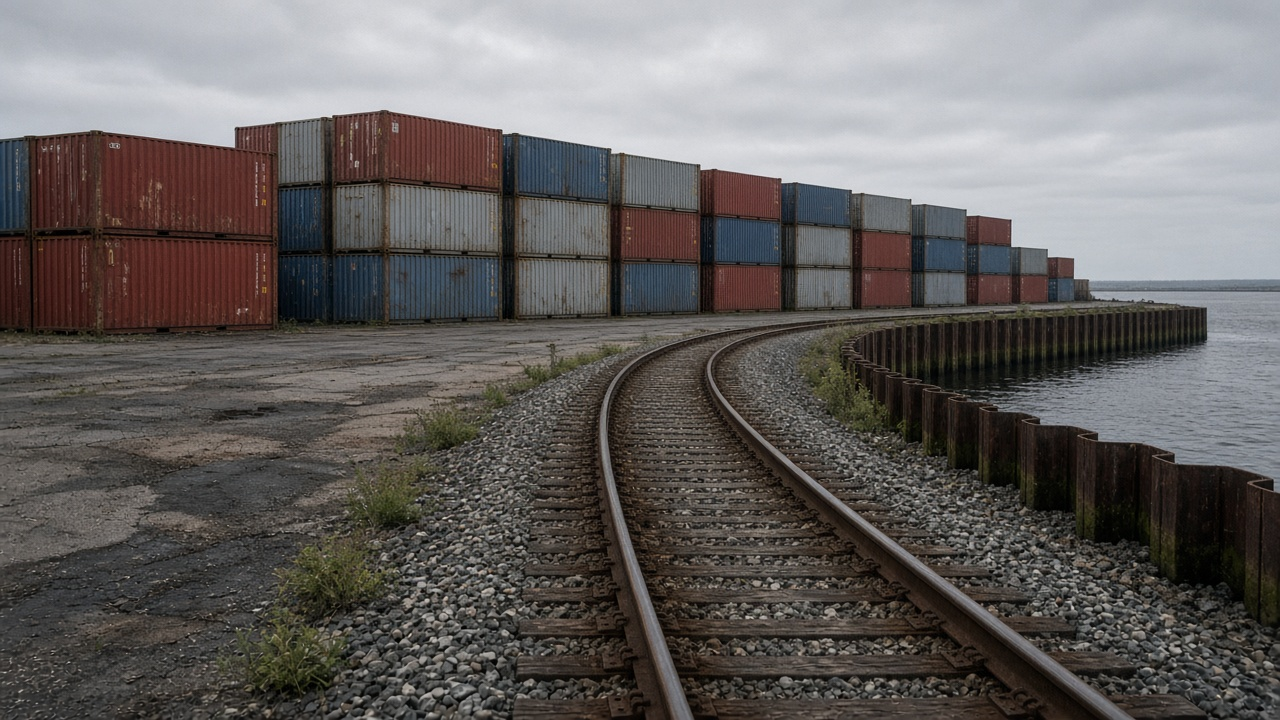
Why the Ship Channel corridor is its own industrial submarket, how warehouse, outdoor storage, and heavy yard users differ, and what to analyze when underwriting.
Most Houston industrial analysis starts with the building: clear height, dock count, column spacing, year built. Along the Ship Channel in and around Pasadena, that is the wrong first question. We think this submarket prices land, access, and permission to operate first, and the roof second. Investors who underwrite a channel property like a suburban distribution box tend to miss where the value sits and where the risk hides.
Why the Channel Is Its Own Submarket
Houston industrial is usually sorted by compass direction and highway. The channel corridor does not sort that way. Its tenant base, physical constraints, and downside scenarios differ enough from the Beltway 8 distribution belt that we treat it as a separate market with separate comps.
Three things set it apart. Demand is tied to a working waterway, so it responds to cargo flows and the health of the industrial base along the water, not just to consumer spending and e-commerce. The users skew toward operators who need dirt, not just a box: drayage and trucking firms, container handlers, materials suppliers, fabricators, and contractors who support plants and terminals. And supply is shaped by history. Much of the corridor was assembled over generations, with irregular parcels, legacy improvements, mixed ownership, and layers of title and environmental history that newer suburban parks never carried.
The result is thin comparable sales, and two similar buildings can be worth very different amounts. The best property is often the one with the least building on it.
What Drives Port-Linked Demand
We describe the drivers qualitatively, because how they transmit matters more than any single figure.
- Containers. Container flows through the port create demand for chassis storage, container staging, empty returns, drayage dispatch, and transload space. Much of this needs paved, lit, secured yard more than conditioned floor area.
- Bulk and breakbulk. Steel, project cargo, and similar freight create demand for laydown, heavy-haul staging, and covered storage with strong floors and wide aprons.
- Petrochemical-adjacent logistics. Plants and terminals pull in a long tail of service demand: pipe and valve suppliers, fabrication shops, industrial contractors, and equipment rental operators. This demand follows plant maintenance and capital programs, which move on different cycles than retail freight.
- Truck and equipment parking. Operators want to be close to the gates they serve, because proximity saves deadhead time. That is why a modest parcel near a key approach can outbid a better building farther out.
These drivers are correlated but not identical. A slowdown in containerized imports hits one set of users while a plant turnaround season supports another.
Three Kinds of User, Three Kinds of Real Estate
Channel-area industrial is at least three products, and they trade and finance differently.
- Warehouse and distribution. Enclosed floor area, docks, truck court. Building function, clear height, freeway access. Newer bulk competition and obsolescence.
- Industrial outdoor storage (IOS). Paved, secured yard with limited building. Yard size, entitlement, access, proximity to cargo and plants. Tenant credit, site condition, permitted use.
- Heavy industrial and yard-heavy users. Fabrication, laydown, heavy-haul staging. Power, floor and apron strength, rail proximity, permission to operate. Environmental history, special-purpose improvements, re-leasing.
IOS deserves a caution. Some investors now treat it as a clean, low-capex product. A yard has few moving parts, which is its appeal, but its value depends on entitlement, drainage, surfacing, and the tenant's willingness to keep operating there. A fenced lot is only worth what the next user can lawfully do on it.
Where the Value Sits: Access, Yard, Entitlement
In a conventional distribution deal, building area is the unit of value. On the channel, we rank the drivers differently.
Access. Truck access is the first filter. How many turns does a driver make between the site and the gates and the freeway? Do the approach roads support loaded heavy trucks, and can a tractor and trailer enter and exit without blocking the street? Corridors such as Highway 225, Spencer Highway, Fairmont Parkway, and Red Bluff Road come up often, but the answer for any site depends on its exact approach. We would drive it at shift change before trusting a map.
Yard. Usable yard is the scarce input. The useful measure is not how much land surrounds the building but how much of it is paved, drained, graded, secured, and legally usable. We covered the same dynamic from the value-add side in our look at older Class B industrial and where the value hides. On the channel the stakes are higher, because the yard is often the entire thesis.
Entitlement. The right to run a given use is an asset. It may come from existing permits, a legal nonconforming status, or the way the area has developed, and it can disappear. A change of use, a long vacancy, or a redevelopment can reset the question, so we would never assume a decades-old use can continue or be replaced by something similar. Confirm it in writing with the right authority.
Clear height versus yard ratio. Clear height still matters for warehouse users, but for yard-driven tenants the more telling ratio is yard to building. A tenant that stages equipment outdoors may want a modest shop and a lot of paved ground. A tired building on a large, well-located lot lets the land do the work.
Physical and Regulatory Questions That Move Value
Rail and heavy-haul. An active spur, or the right to reinstate one, is a differentiator only if the track, the switching arrangement, and the right of way are real and usable. An old spur that cannot be reactivated is a liability that looks like an asset. Heavy-haul users care about road limits, turning radii, and where oversize loads can legally travel.
Power. Fabricators and some processing tenants need electrical capacity that many older sites lack. Utility timelines can drive the whole lease-up schedule, so raise power with the utility early rather than assume it can be added.
Jurisdiction and zoning. Houston is known for not having conventional zoning, but that is not the whole story here. Pasadena is a separate city with its own development rules, and nearby parcels may sit in other cities, in unincorporated areas under county authority, or in extraterritorial jurisdictions where different tools apply. We treat jurisdiction as a first-week diligence item and ask counsel to confirm what governs the site.
Floodplain and storm exposure. The corridor is low, coastal, and exposed to hurricanes. Underwriting should look at flood zone mapping, the elevation of the improved area versus the yard, drainage, and the site's history in past storms. Storm surge is a different risk than rainfall flooding, and mitigation for one may not help the other. Insurance follows: wind, named storm, and flood coverage can carry higher costs, higher retentions, and tighter terms near the coast, and carriers can change their appetite after a bad season. Run the insurance quote before you finalize pricing, not after.
Environmental history. Industrial land used for decades can carry legacy conditions. A Phase I environmental site assessment is where diligence starts, and on a channel property we would expect it to raise deeper questions: past tenants, storage practices, historic fill, and the condition of tanks and drainage features. State programs can offer paths for managing known conditions, and an experienced environmental professional should guide that conversation.
Tenant Credit and Lease Structure for Yard Users
Yard tenants range from established operators with long contracts to thinly capitalized firms that grew fast. Because the improvements are modest, the credit behind the lease often matters more than the collateral. A building can be re-let. An unpermitted yard may not be. We would look at:
- Term and renewal. Longer terms support an owner investing in paving, fencing, and lighting.
- Surface maintenance. Heavy equipment destroys paving. The lease should say who repairs it, to what standard, and who pays.
- Use and compliance. Define permitted materials, storage limits, and the tenant's duty to keep its permits current.
- Security and guaranty. A meaningful deposit or creditworthy guarantor can matter more here than in a typical warehouse lease.
- Surrender and holdover. Spell out how the yard must be left, including cleanup against a baseline, and how holdover is treated when moving heavy equipment takes time. Our piece on holdover provisions in Houston commercial leases covers the mechanics.
What to Analyze When Underwriting
- Define the user. Which of the three property types is this, and who is the next tenant if the current one leaves?
- Test the access. Drive the truck route to the gates and the freeway and watch a tractor and trailer move in and out.
- Separate land value from building value. Price the site as a yard with no building, then add the improvements.
- Verify the right to operate. Confirm jurisdiction, use rights, permits, and any nonconforming status.
- Read the environmental record. Order the Phase I early and plan for follow-up work.
- Stress the storm case. Model flood and wind scenarios with real insurance quotes and a downtime assumption.
- Underwrite the tenant, not just the lease. Learn how it earns the money that pays the rent and which driver it depends on.
- Plan the exit. Ask who buys this from you and why.
How It Differs From Other Houston Industrial Submarkets
The big distribution belts lean on rooftops, retail freight, and e-commerce, and they reward modern box specs. The channel corridor trades on cargo, plants, and equipment, and it carries a different risk set. In practice that means smaller sites, more irregular parcels, more owner-users, and more special-purpose improvements. It also means fewer institutional comparables and wider gaps between what a seller thinks the property is worth and what a careful buyer will pay.
Risks We Would Not Underplay
- Cargo and industrial cycles. Port volumes move with trade and industrial activity. A property tied to one driver can lose tenants quickly when that driver slows.
- Regulatory change. Environmental rules, permitting, and port-related policy can change the economics of a site or tenant.
- Storm exposure. A major storm can interrupt operations, damage improvements, and reshape insurance for years.
- Environmental liability. Legacy conditions can limit financing, delay sales, and complicate exits.
- Truck traffic. Heavy traffic can strain local roads and draw attention from neighbors and officials, which can influence future permits and operating hours.
- Thin liquidity. Specialized sites can take longer to sell.
Our Position
We would be buyers of sites with strong access, defensible entitlement, a clean enough environmental file, and room to serve more than one user type. We would be cautious on properties priced as if every fenced acre carries the same value, or underwritten as if tenant demand stays flat through a cargo slowdown. On the channel, a clear story about access, permitted use, and storm resilience is worth more than a nicer building.
If you are weighing a channel-area acquisition, a yard lease, or a hold-versus-sell decision, talk with our team.
This article is general market commentary, not legal, environmental, tax, insurance, or investment advice. Conditions vary by site, and outcomes depend on the facts and the documents. Consult a qualified attorney and other professionals about any specific property.