
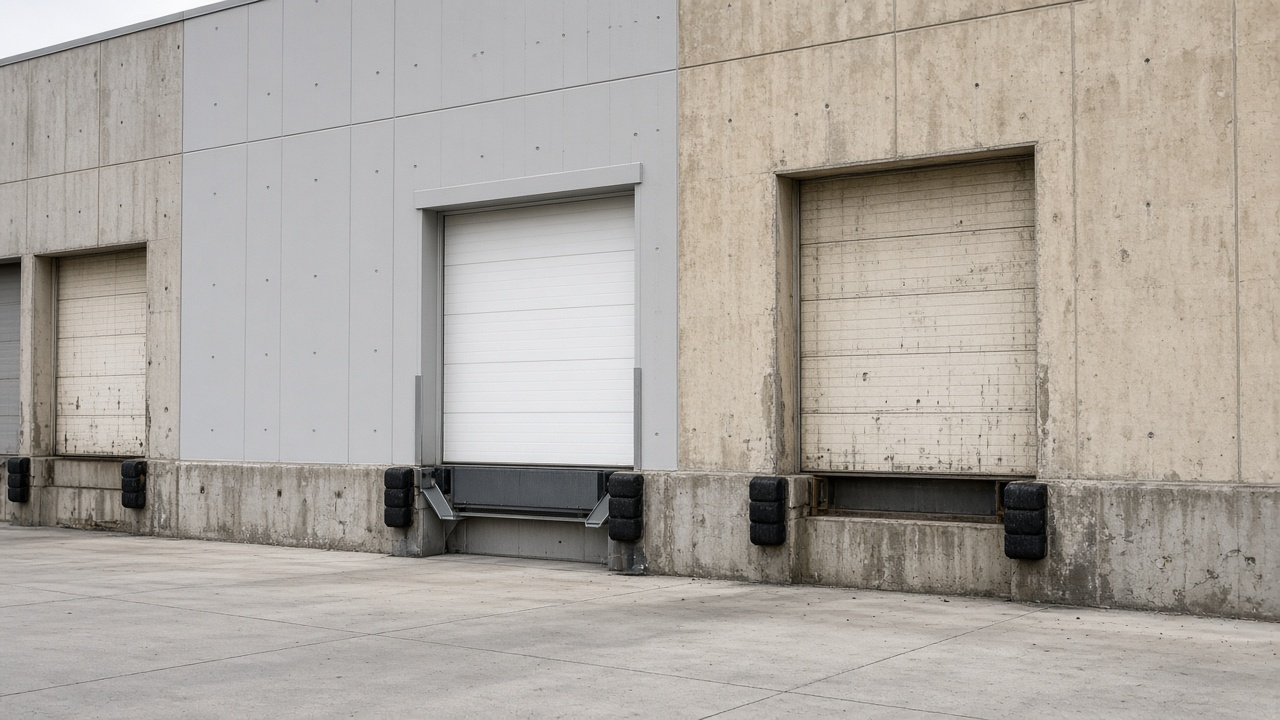
Older Class B industrial in Houston is often mispriced, not obsolete. Here is where the upside hides, how to sequence capital, and which risks kill the return.
Most of the conversation about Houston industrial centers on new bulk product. We think the more interesting money sits in the older Class B buildings that new supply passed by: tilt-wall and metal buildings with shallow truck courts, tired offices, and systems that were fine for the tenant who signed a generation ago. These buildings are rarely obsolete. More often they are mispriced against what a small or mid bay user actually needs, and the gap between those two things is the value-add.
Obsolescence looks different in industrial than in office. Downtown office owners are fighting a demand problem, which we covered in our read on downtown office vacancy and sublease. Older industrial usually has a functionality problem, and functionality can often be bought.
What Makes a Building a Candidate
Not every tired building is a value-add play. The candidates we like share a few traits: a location that still works for last mile and service users, a site with room to improve truck circulation or trailer parking, a structure that is sound under the deferred maintenance, and a basis that leaves room for capital after closing. If the location is wrong, no renovation fixes it.
The corridors where this thesis tends to hold include the East side along the Ship Channel and Highway 225, the I-10 East corridor toward Baytown, Southwest Houston along US 59/I-69, and infill pockets along Beltway 8.
Where the Value Hides
Start with what cannot be fixed. Clear height is set by the structure, and raising a roof is rarely economic, so underwrite the building for the users its clear height serves rather than the users you wish it served. Almost everything else is on the table.
- Dock doors and truck courts. Adding dock high doors, levelers, and a grade level door can widen the tenant pool more than any cosmetic spend. A shallow truck court is harder, but reworking parking, curb cuts, and circulation can sometimes recover usable depth.
- Trailer parking and outside storage. Paved, fenced yard space is scarce in infill locations, and users pay for it. Excess land behind an older building is often the cheapest upside on the site.
- Power. Many older buildings were wired for lighter use. Upgrading service opens the door to light manufacturing and fabrication users. Talk to the utility early, because service upgrades run on their timeline, not yours.
- Fire protection. Sprinkler design governs what a tenant can store and how high. Upgrading the system can expand the use profile, but it can also pull in water service and other upgrades, so scope it with a fire protection engineer before you price it.
- Lighting and roofs. LED retrofits are a straightforward win on tenant operating costs. A roof near the end of its life is a leasing objection and an insurance question, so solve it before marketing, not after.
- Office to warehouse ratio. Older buildings often carry more office than modern users want. Right sizing the office, or converting part of it back to warehouse, usually helps more than refinishing it.
- Demising. A single tenant building that sits empty waiting for one large user can sometimes be split into smaller bays with their own doors, meters, and restrooms. Smaller suites tend to lease faster and spread rollover risk.
- Curb appeal. Paint, landscaping, fresh truck court striping, and a clean entrance cost little relative to the rest of the plan and change the first impression on every tour.
Who Is Actually Leasing
Small and mid bay users are the core demand for this product: contractors, distributors, service companies, fabricators, and suppliers tied to the port, petrochemical, and construction economies. They care about functional doors, yard space, power, a clean office, and a reasonable occupancy cost. Most will not pay for modern bulk specs. That is the opening. A well executed Class B renovation competes on total occupancy cost and on space that fits, not on looking like the new building down the road.
Sequence the Capital Plan
Order matters as much as the budget.
- Diligence first. Roof, structure, MEP, paving, drainage, and environmental work before you close, or at least before you commit the major dollars.
- Fix what blocks a lease. Roof, life safety, power, and doors come before finishes.
- Decide the bay plan. Single tenant or multi tenant determines the scope of demising, meters, and restrooms.
- Exterior and curb appeal. Finish these before you start touring.
- Tenant specific work last. Hold office and interior spend until a user is signed, and let improvements follow the lease.
If the building has existing tenants, manage rollover deliberately. Know which leases expire during construction and what happens if a tenant stays past term. Our piece on holdover provisions in Houston commercial leases covers the mechanics.
Risks That Kill the Return
- Deferred maintenance surprises. Underground utilities, slab issues, and roof deck problems hide until work begins. Carry a real contingency.
- Floodplain and drainage. Check the effective flood maps and the local drainage rules. A building in a mapped floodplain may face elevation or detention requirements when it is substantially improved, which can reshape the whole plan.
- Environmental diligence. Older industrial sites can carry a history of storage tanks, solvents, or fill. A Phase I ESA that follows the federal all appropriate inquiries standard is the baseline, and a Phase II may follow.
- Code upgrades triggered by renovation. A change of occupancy or a large enough scope can bring accessibility, fire, and energy code requirements into the project. Get a code review before you finalize the budget.
- Permitting time. City and county review timelines vary with scope and jurisdiction. Build schedule cushion into the carry.
- Lease-up time. Downtime is the most underestimated cost in this strategy. Underwrite a conservative lease-up and price the carry honestly.
- Property taxes. A renovated, leased building will likely be valued differently. Plan for the appraisal district to notice.
Exit Thinking
Decide the exit before the first dollar goes in, because it shapes the scope. A sale after stabilization favors a multi tenant rent roll with staggered rollover that a buyer can underwrite cleanly. A long hold favors durable systems like the roof and power over cosmetic spend. Either way, what you sell is the rent roll and the condition report, not the paint.
Our view is simple. In Houston, older Class B industrial in the right location is one of the more forgiving value-add plays, as long as the plan fixes function, respects what the structure cannot change, and prices downtime honestly.
If you own or are underwriting an older industrial building and want a second set of eyes on the plan, talk with our team.
This article is general information, not legal, tax, environmental, or engineering advice. Consult qualified advisors about your specific property.